If your website traffic has been inconsistent lately—or you’ve noticed fewer clicks even when you rank well—you’re not imagining it.
Google search is changing fast.
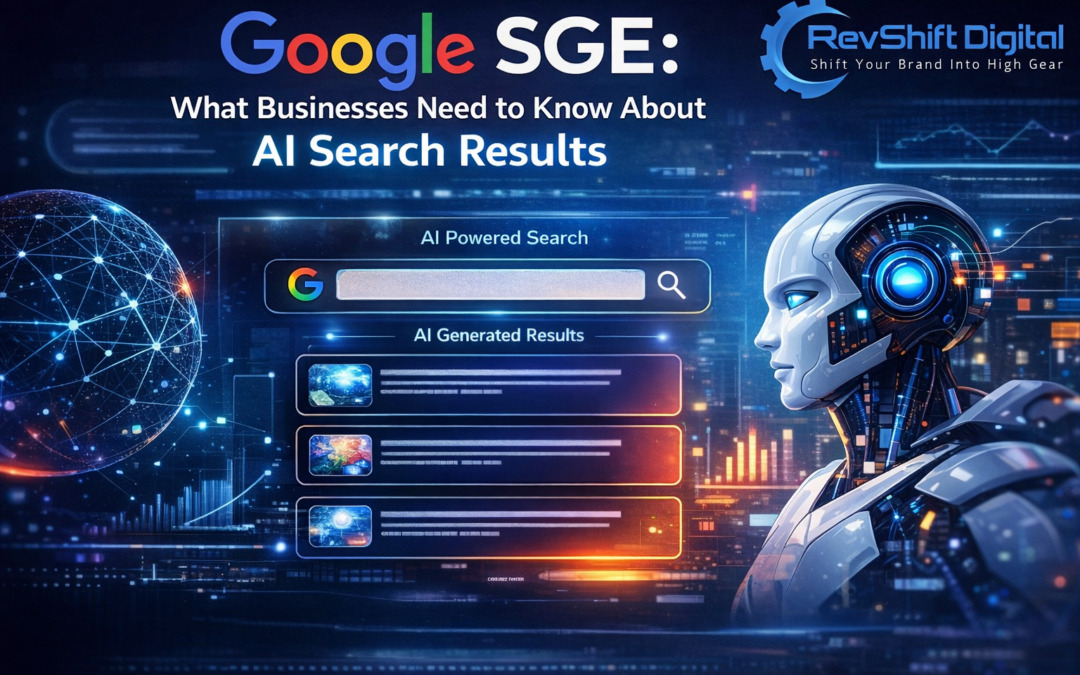
With the rise of AI-powered search results (often referred to as Google AI Overviews and previously SGE – Search Generative Experience), businesses are seeing a major shift in how users find information, compare services, and choose who to contact.
And here’s the problem:
Even if your website ranks on page one, you may still lose clicks if Google’s AI summary answers the question before someone ever visits your site.
In this post, we’ll break down what’s happening, why it matters, and what you can do right now to stay visible and competitive.
What Are Google AI Search Results (AI Overviews)?
Google AI search results are summaries generated directly inside Google search.
Instead of only showing the traditional “10 blue links,” Google now frequently displays:
-
AI-generated answers
-
Key takeaways from multiple websites
-
Suggested steps or recommendations
-
Quick comparisons and definitions
-
Follow-up questions users might ask next
These AI summaries often appear at the top of the search results, which means they can become the first (and sometimes only) thing a searcher reads.
Why Google AI Search Matters for Businesses
The biggest shift isn’t just technology—it’s behavior.
Google’s AI results are changing the way people search by making the experience faster and more “answer-first.”
That creates a few real-world impacts for business owners:
1) Fewer clicks—even if you rank well
If Google gives the answer directly, users don’t always need to click a website.
2) Higher competition for attention
Your business may be competing not just against other companies, but against Google’s AI summary itself.
3) Trust is shifting to the “source” Google chooses
When Google pulls information from websites to build AI summaries, it’s essentially selecting which brands appear credible.
If your site isn’t optimized to be seen as a trusted source, you risk being ignored—even if your services are better.
The New SEO Goal: Become the Source AI Pulls From
Traditional SEO has always been about rankings.
AI search adds a new layer:
Now your goal is to become the site Google trusts enough to pull answers from.
That means your content needs to be:
-
Clear
-
Structured
-
Helpful
-
Specific
-
Trustworthy
-
Easy to scan
If your pages are vague, overly salesy, or missing real information, Google’s AI will likely skip over them.
How to Optimize Your Website for AI Search Results
Here are the most effective strategies businesses should focus on right now.
1) Answer Questions Directly (Like a Human Would Ask Them)
AI search heavily favors content that clearly answers real questions.
Examples:
-
“How much does SEO cost per month?”
-
“What’s the difference between local SEO and national SEO?”
-
“How long does Google Ads take to work?”
-
“What is a sales funnel and why do I need one?”
If your content doesn’t answer questions like these, your competitors will.
2) Add FAQ Sections to Your Service Pages
FAQ content is one of the easiest ways to improve your visibility in AI-driven search results.
A good FAQ section:
-
Uses real customer questions
-
Gives short, direct answers
-
Builds trust fast
-
Helps Google understand your page
Bonus: FAQs also help you show up in the “People Also Ask” section.
3) Improve Your Content Structure (So Google Can Understand It)
Google’s AI needs clean structure to interpret your page correctly.
Make sure your pages include:
-
Clear headings
-
Short paragraphs
-
Bullet points
-
Strong topic focus
-
Easy-to-find key info
If your content is one long block of text, it’s harder for Google (and users) to process.
4) Update Your Pages More Often Than Your Competitors
AI search favors freshness when the topic is changing.
If your SEO pages haven’t been updated in months (or years), you may lose relevance.
Even simple updates help, like:
-
Updating service details
-
Adding new FAQs
-
Including recent trends
-
Adding new examples or case studies
5) Strengthen Trust Signals (Because AI Prioritizes Authority)
Google’s AI doesn’t just look for keywords—it looks for credibility.
To improve trust, include:
-
Real testimonials
-
Case studies or results
-
Clear business info (who you are, where you operate)
-
Contact details and service areas
-
Consistent branding across your website
This helps Google view your business as legitimate and reliable.
Does AI Search Mean SEO Is Dead?
Not even close.
But it does mean SEO is evolving.
SEO isn’t just about ranking a page anymore—it’s about building a website that:
-
answers questions better than anyone else
-
provides real value
-
earns trust
-
and makes the next step easy (call, book, buy, or contact)
Businesses that adapt early will gain a major advantage.
Businesses that ignore it will feel like their traffic is “random” and unpredictable.
What Businesses Should Do Next
If you want to stay visible in Google’s new AI search results, focus on these steps:
-
Improve your service pages with FAQs and direct answers
-
Publish helpful blog content that targets real search questions
-
Optimize your website structure and speed
-
Track performance so you know what’s actually working
-
Build authority through consistency and clarity
AI search rewards businesses that are useful—not just businesses that are loud.
Need Help Optimizing for Google’s AI Search Results?
At RevShift Digital, we help businesses adapt to the future of SEO with strategies built for how people search today—and how Google is evolving tomorrow.
We focus on:
-
SEO optimization that improves visibility and trust
-
content strategies that rank and convert
-
website improvements that support performance
-
tracking systems that remove guesswork
If you’re ready to future-proof your rankings and stay competitive as AI search evolves, we’re here to help.
👉 Want to improve your search visibility? Get a FREE SEO audit >>>
Perfectly indited content, Really enjoyed examining.